
Autumn-ing
Finding rhythms of rest as the nights draw in.

I was woken at 5am today by the wail of my almost-two-year old. I’d call it a plaintive cry, but that’s not the right adjective whatsoever. Her morning calls, frequently at a similarly unearthly hour, are more like klaxons. The feeling I get when she shouts at these unearthly hours are, I’d imagine, akin to what the recruits feel on those reality TV ‘SAS’ shows, when they’re barrelled awake and bundled off somewhere in a staged ‘kidnap’. My cortisol levels are never higher than when I’m thrown into consciousness by one of my children at a time when we should all be blissfully asleep.
The reality is that my daughter’s 5am wake-ups are part of a lengthy list of things that routinely make my cortisol levels peak during this busy season of working and raising young children. And if, like me, your life is very full - with work, family life, running a home, keeping on top of a budget, trying to be involved in church life and maintain friendships - I know you’ll have felt this peak too. This is especially true as the days shorten and the nights draw in.
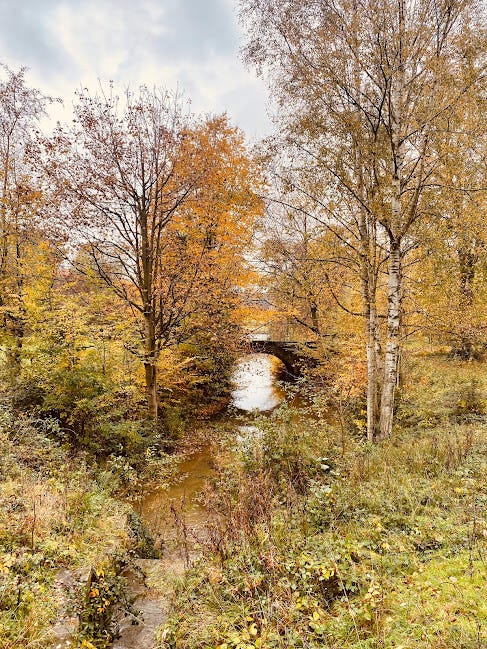
Autumn is my favourite season. Crisp, bright sunshine, autumn wardrobes, and those colours! But when we start to head into the colourless, bleaker months between now and Christmas, it’s easy to let overwhelm get the better of us. Things that might have felt lighter after a walk or run in the sunshine, early-morning fresh air or the warmth of the summer rays on our skin are now consigned to the inky darkness of the typical British winter hours, where our energy dips and our motivation seems to hibernate along with the wildlife. Activities and tasks that energised us in the summer months can quickly turn into mountainous obstacles as winter approaches.
But perhaps autumn, and the anticipation of winter, are the perfect opportunity to re-learn rhythms of rest and practice leaning into God. Instead of continuing at full-pelt, what if we made changes to our expectations and our lives so that autumn became a season of embracing our limitations and rejoicing anew in God’s omnipotence?
With that in mind, here are three ways that I have been trying to anticipate, and even relish, the prospect of autumn as it turns to winter, and implement God’s command to rest both physically and emotionally.
STOP THE STRIVING
The Bible makes it clear that God created the world, and us, with rhythms and seasons. In Genesis 2, God ‘blessed the seventh day and made it holy, because on it God rested from all his work that he had done in creation.’ This is so significant in terms of God’s design for us, that he gave it to Moses as the fourth of the Ten Commandments: ‘observe the Sabbath day and keep it holy.' (Deuteronomy 5) The modern world presents the antithesis to this - ever-longer working hours and permanent ‘contact-ability’ through our phones. In this context, intentional rest can seem incongruous, even irresponsible.
But what if, as the clocks go back and the skies grow heavy with darkness ever-earlier, we took it as God’s reminder for us to stop striving, to live counter-culturally in a world that never stops? That might look like shortening to-do lists to their minimum if that’s possible, doing fewer things and doing them more slowly, and actively building time to rest in to our week. For me, it looks like removing extraneous things from my day to try to prioritise slowing down and spending time with my family - although this is a work in progress!
READING MY BIBLE WITH REST IN MIND
The Bible has a lot to say about being busy and active. Proverbs 12 tells us that ‘those who work the land will have abundant food,’ Proverbs 31 tells women to be ‘busy in the home.’ Ephesians 2 says that ‘we are God’s workmanship, created in Christ Jesus for good works, which God prepared beforehand, that we should walk in them.’
But the Bible also speaks on many occasions, and very directly, about rest, and its purpose. Jesus himself often took time to rest when he had been teaching and healing for a long time. In the Psalms, David writes regularly about rest and peace. In Psalm 4 he says, ‘in peace I will lie down and sleep, for you alone, LORD, make me dwell in safety.’
This time of year is the perfect season for me to dig deep into these portions of the Bible with rest in mind - considering how and why Jesus, and David, rested. They were confident to rest physically, because they knew that God, in his sovereignty, would provide for their every need, and they could stop striving.
NOTE TO SELF: REST IS NOT LAZINESS
If I’m completely honest, I had to fight the desire to cringe inwardly as I wrote some of the above lines. Am I really just talking about…doing less? It’s up to each of us to decide where our lines are drawn and where we feel convicted about doing more, or doing less.
Clearly I am not advocating for leaving my family without clean clothes to wear or taking an impromptu nap at work. But accepting our natural instincts to rest more during the darker, colder months might be a God-given yearly opportunity to re-evaluate where we’ve been trying to do things in our own strength, rather than trusting in God.
We’ve seen that God mandates rest in the Old Testament, but Jesus manifests it in the New Testament. He tells us, in Matthew 11, to come to him when we are weary, and he will give us rest. Have I been running at such a pace through life, adding to my every growing to do list, that I have forgotten to stop and listen for God’s voice speaking into those situations? In these instances, rest - slowing down deliberately - is usually just what my soul needs.
I want to use these months when I feel extra weary as a chance to urge my soul towards rest in Jesus, knowing that he is the ‘author and perfecter of our faith’, not the works that I complete or the jobs that I tick off my to-do list.